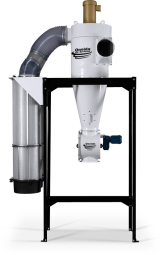



If you run a woodworking shop – or any business requiring tools, machines, and shop improvements – Section 179 of the U.S. tax code could save you a lot of money at tax time. Section 179 lets you deduct the full cost of qualifying equipment and tools in the year you buy and use them, instead of spreading the deduction out over several years through depreciation.
This is huge for cash flow! Buying a $40,000 Commercial Dust Collection System? You could potentially deduct the entire $40K this year rather than writing off a few thousand per year for the next few years. You can even combine this with our Commercial Leasing options so you don't have to pay for it all up front!
Let's break down what it is, what's new for 2025, and how you can use it to your advantage.
What is Section 179?
Originally referred to as the "Hummer Loophole" (due to a previous exploitation by some small businesses to buy luxury SUVs) Section 179 is a popular tax deduction for small business with heavy equipment purchases. Woodworking and other small manufacturers often require a large amount of big tools, making them ideal candidates to save with Section 179.
Let's say you run a woodworking shop and buy a new dust collection system and CNC router for a total of $300,000 in equipment in 2025. Here's what happens:
- You elect Section 179 to deduct the full $300,000 on your tax return.
- If your business makes at least $300,000 in taxable income, you can deduct it all.
- If you only made $200,000 in income, you can only deduct $200K under Section 179 – but the remaining $100K could still be deducted using Bonus Depreciation, which now allows 100% write-off.
So either way, you're getting a full deduction in year one – if you plan it right. This accelerates tax deductions, reduces taxable income, and frees up cash.
Qualifying Purchases:
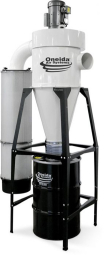
- Dust Collectors¹
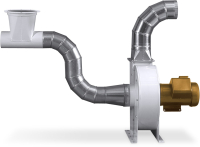
- Ductwork & Hose
- Machinery & Equipment¹
- Vehicles²
- Computers & Software
- Shop Furniture / Fixtures
- HVAC Systems
- Security Systems
- Fire Protection
¹ Used equipment also qualifies as long as it's new to you and used more than 50% for your business (i.e. not personal use).
² Subject to weight and use limits.
Checklist:
- Buy and install eligible equipment before December 31, 2025.
- Make sure it's used over 50% for business purposes.
- Track your total purchases—don't go over $4M unless bonus depreciation can cover the excess.
- File IRS Form 4562 with your tax return to elect Section 179.
- Work with a tax pro to optimize Section 179 vs. Bonus Depreciation.
Important Caveats:
- You only get the deduction if the equipment is used in 2025. Ordering it isn't enough; Installation counts as being "placed in service"
- You only get the deduction if the equipment is used in 2025. Ordering it isn't enough; Installation counts as being "placed in service"
- Be careful when using an asset for personal use as well.
- Section 179 only applies up to your taxable business income.
- Some States don't follow federal Bonus Depreciation rules.
- If you stop using the asset for business in the future, you may have to pay back some of the deduction - this is known as recapture risk.
What's New in 2025?
Because of the new tax statutes within the OBBBA, Section 179 has seen some marketed improvements this year:
- Increased Deduction Limit - You can now deduct up to $2.5M (up from $1.22M) in equipment purchases for the year.
- Phase-out Threshold Raised - The deduction begins to shrink if you buy over $4M worth of equipment, and disappears completely at $6.5M.
- 100% bonus depreciation is back - You can write off the full remaining cost of qualifying assets not covered by Section 179. so even if you hit the Section 179 limit, you might still be able to deduct the full amount using bonus depreciation.
If you're planning to upgrade your shop, 2025 might be the best year in a long time to do it.
With higher Section 179 limits and 100% bonus depreciation back, the tax savings can be massive. Just make sure you time it right, document everything, and coordinate with your accountant to make the most of it.
Why Section 179 Is Useful for Small Businesses
For manufacturing businesses such as woodworkers, floor sanders, concrete contractors, cabinet shops business—perhaps with a few CNC routers, planers, saws, sanders, dust-collection systems, finishing equipment, shop computers / software, and possibly facilities upgrades—Section 179 (plus bonus depreciation) presents several attractive advantages:
- Improved Cash Flow
- Getting the deduction in year one rather than over 5–7 years improves your after-tax cash flow, which is valuable to reinvest in the business or reduce interest costs.
- Encourages Replacements & Upgrades
- If you were postponing a machine replacement or upgrade, Section 179 gives an additional incentive to pull the trigger while the tax break is favorable, thereby improving productivity and competitiveness.
- Used Equipment Still Qualifies
- Woodworkers often acquire used or lightly used machinery. Section 179 can allow for the deduction of used equipment (if it meets other rules). This means you can benefit from full deduction even when buying secondhand tools.
- Flexible Election
- You don't have to deduct the full cost under Section 179. You can also utilize bonus depreciation or standard depreciation, which gives planning flexibility for managing taxable income, avoiding recapture issues, or smoothing tax liability.
- Facility / shop improvements
- Some shop building improvements – such as new HVAC, roofing, fire or security systems – may qualify as "qualified improvement property" under Section 179, enabling deduction of those investments (not just machinery).
- State Conformity
- In states that do not allow or heavily restrict Bonus Depreciation, Section 179 often still applies. This helps ensure that you get the full deduction possible in such jurisdictions.
- Possible Full Write-off
- Because of the reinstated 100% Bonus Depreciation, after exhausting your Section 179 capacity you can still use Bonus Depreciation to fully write off the remaining basis on qualifying capital equipment purchases – essentially achieving full first-year deduction on many items.
Bonus Depreciation vs. Section 179
Most business utilize both to deduct big purchases right away, but there are significant differences. Typically, Section 179 is applied first and bonus depreciation is used to cover the rest.
| Feature | Section 179 | Bonus Depreciation |
|---|---|---|
| Limit? | Yes – $2.5M in 2025 | No dollar limit |
| Business income required? | Yes – limited by profit | No – can create a loss |
| Used equipment allowed? | Yes | Yes |
| States allow it? | Most do | Some don't |
| You choose what to deduct? | Yes – line by line | No – automatic unless opted out |
Real-World Use Cases
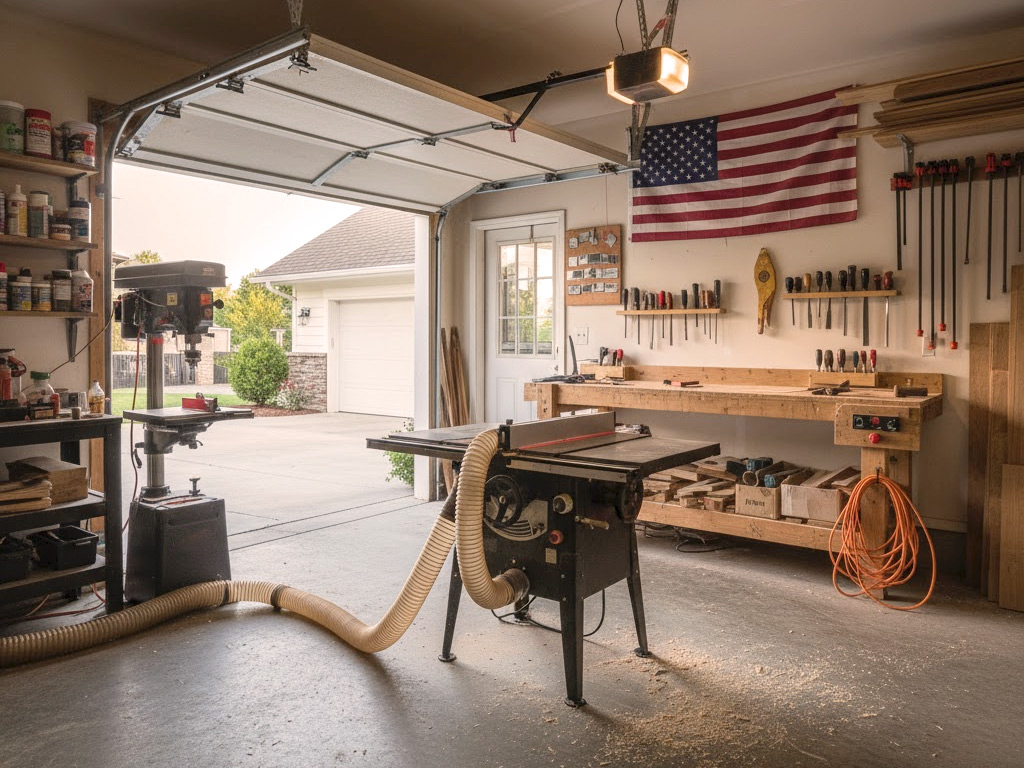
Small Shop Upgrade
You buy $80,000 worth of new machines and make $100,000 in profit.
- Deduct all $80K via Section 179.
- Saves you around $16K – $24K in taxes, depending on your bracket.

Low-Income Year
You spend $200,000 on tools but only make $50,000 in profit.
- Deduct $50K under Section 179.
- Deduct remaining $150K via Bonus Depreciation.
- You still write off the full amount, possibly even creating a net loss (which can offset other income or carry forward).
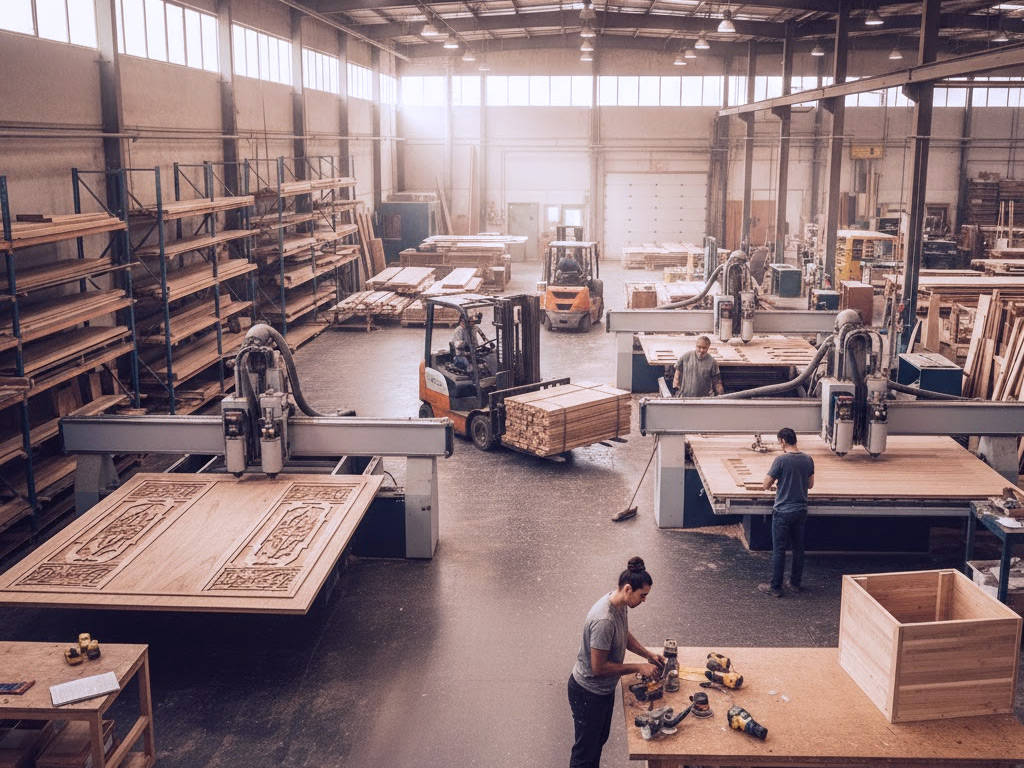
Big Investment Year
You spend $3.5 million upgrading your entire operation.
- Section 179 lets you deduct $2.5 million.
- Use Bonus Depreciation to deduct the rest ($1M).
- If your income and state allows for it, the full $3.5 million is deductible in 2025.